
27/11/2025

Via privata Molina 80/7 – 80/9, Vignate (MI)

02 95361055

info@fitex.it

Thread trimming scissors are among the most commonly used tools in professional sewing, but they are also among those whose features are often not used correctly. In addition to cutting speed and precision, they offer technical advantages that, when used correctly, can make all the difference.
In this article, you will discover advanced techniques for getting the most out of these scissors, with practical tips and secrets from professionals.
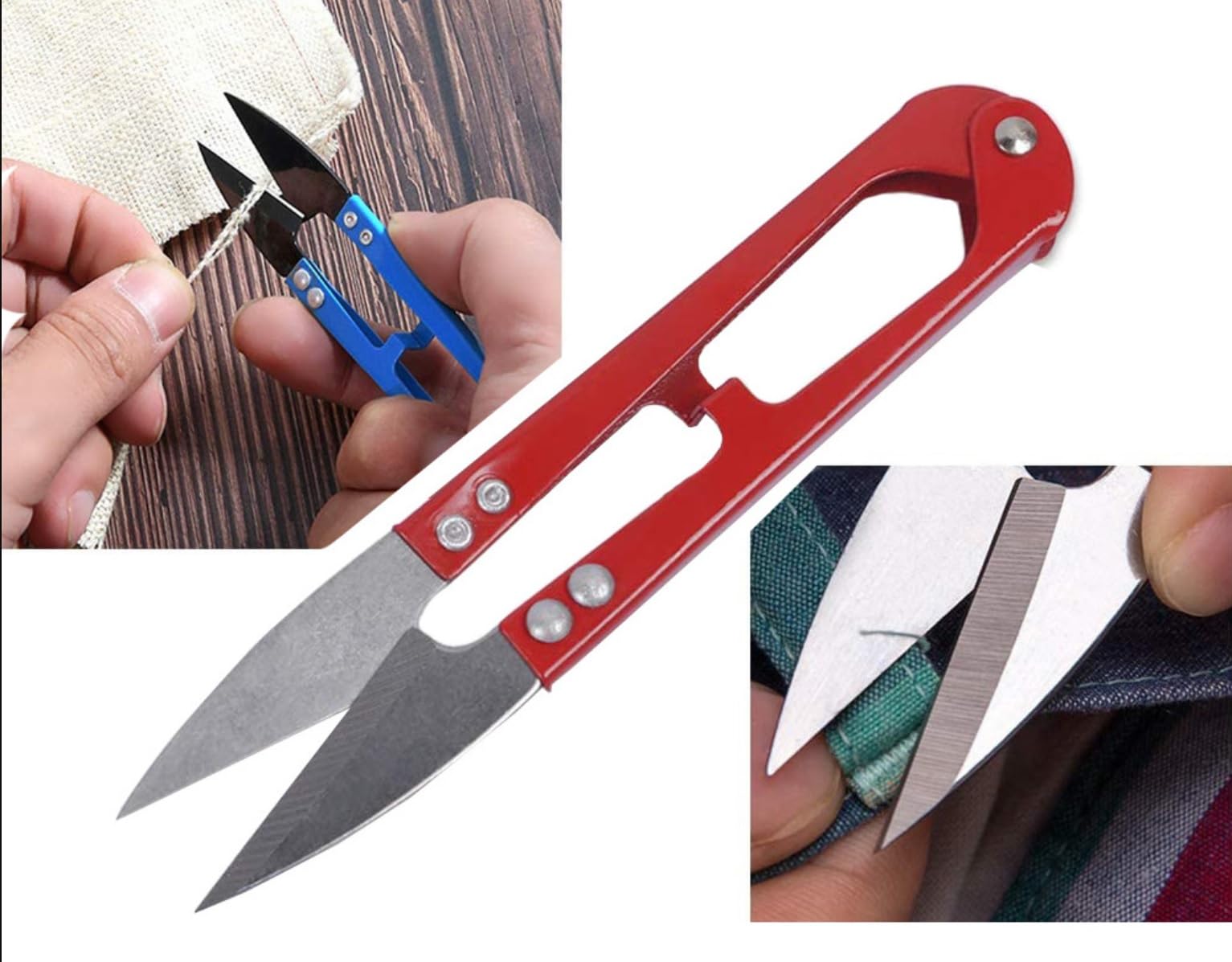
Thread-cutting scissors differ from traditional scissors in that they have a thin, precise blade designed for quick, clean cuts on most fabrics, even delicate ones. If you want to find out all the main features, we recommend reading the in-depth article on thread-cutting scissors.
Before you begin, make sure the blades are clean and sharp. Regular maintenance helps maintain cutting precision and prolongs the life of the scissors.
Check the central screw: it should be neither too tight nor too loose. Clean the blades with a soft cloth after each use and, if necessary, apply a drop of oil to improve their smoothness. In addition, a correct grip, with the thumb aligned with the axis of the shears, reduces fatigue and improves control over the cut.
What are the advanced cutting techniques with thread-cutting scissors? Let’s discover some of them.
Precise linear cutting
To achieve a straight and even cut, work on a stable surface, guide the blade along the edge of the fabric, and maintain constant pressure. Avoid lifting the scissors too much from the work surface: any interruption can create micro-imprecisions that compromise the result.
Curved and shaped cutting
For curved cuts, it is important to follow the fabric without forcing it. Use the entire length of the blade to follow the desired line, trying to keep your wrist relaxed. In more complex areas, cut with small, controlled movements so as not to tear the fibers. This technique is particularly useful for sleeves, necklines, and decorations.
One of the most common mistakes is using thread-cutting scissors on unsuitable or overly thick fabrics, which risks damaging both the blade and the fabric. Care should also be taken with sharpening: a dull blade can tear the fabric instead of cutting it. Another typical mistake is straining the hand with an incorrect grip or continuous use without breaks.
Correct cutting sequence
Always start with the main contours of the pattern and work your way towards the finer details. This practice will help you maintain the stability of the fabric and reduce unnecessary waste.
Use in conjunction with other tailoring tools
Combine thread-cutting scissors with rulers, chalk, and thread tweezers to improve the precision of your lines. Good coordination between tools makes the cutting process much more effective and safer.
Monitoring the blades over time
Regularly check the sharpness of the blades and the condition of the central screw. Careful maintenance will save you time, materials, and replacement costs.
How can you tell if your thread-cutting scissors are sharp enough?
A pair of well-sharpened scissors cuts effortlessly and leaves no frayed edges. If you have to force the scissors to cut, it’s definitely time to sharpen the blades.
Which fabrics require special attention?
Silk, chiffon, and stretch fabrics require precision and sharp blades to avoid damage.
Can I use pinking shears on multiple layers of fabric?
It is best to limit yourself to no more than two or three layers. With too much thickness, the cut loses precision.
How often should maintenance be performed?
It depends on how often you use them. For daily use, we recommend light cleaning every day and checking the sharpness every 1-2 months.
Thread trimming scissors are valuable tools for achieving a precise, professional cut. Knowing advanced techniques and taking care of maintenance allows you to fully exploit their potential. Fitex selects only high-quality tools, designed to meet the needs of professional and amateur tailors.
📲 Download the Fitex app to explore the complete catalog and order your tools directly.





Every day, a promotion on an item we have in stock: join our mailing list and take advantage of the benefits!
Already know which item you need?
Order it directly from our app, available for Android and iOS.