
27/11/2025

Via privata Molina 80/7 – 80/9, Vignate (MI)

02 95361055

info@fitex.it

Do you want your tailor-made garments to fit perfectly? A dress form can help you achieve this and is an indispensable tool, even for those who already have sewing experience.
In this article, Fitex explains how to use it correctly, with practical advice, useful techniques, and a few tricks of the trade.
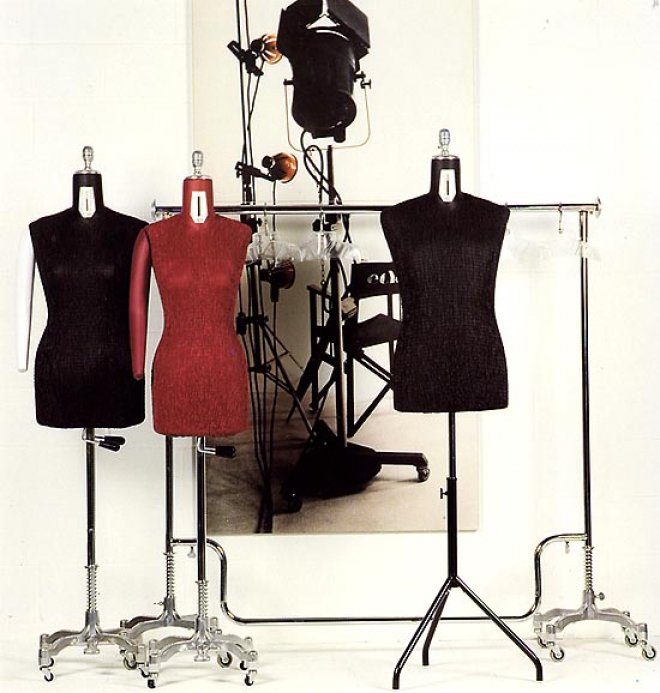
The use of a mannequin during the creation or finishing phase of a garment allows you to obtain a three-dimensional and realistic view of the fit.
This tool allows you to correct any imperfections in real time, save time during the fitting phase, and reduce the margin of error. It is the ideal ally for those who want to be daring, test new shapes, and make every handmade garment even more professional.
There are different types of mannequins: adjustable, fixed, professional, on wheels, with movable shoulders. For a complete guide to choosing the right one, we recommend reading the article dedicated to tailoring mannequins.
Once you have adjusted the mannequin to your measurements, you can start draping: secure the fabric with light pins or adhesive tape, following the main lines of the body. Check the symmetry and lengths and pay close attention to how the fabric falls.
When it comes to creating a dress, it is good practice to work in sections: start at the front, move on to the sides, and finish with the back.
The mannequin is also ideal for testing collars, sleeves, and circle skirts. You can use accessories such as tailor’s rulers, long pins, flexible tape measures, and finishing scissors to improve accuracy. When you are satisfied with the fit, transfer the pattern to paper or directly onto the final fabric.
One of the most common mistakes is incorrect fabric positioning, which can completely alter the perception of the fit.
Another frequent mistake is not adjusting the mannequin according to actual measurements, which can result in garments that are too loose or too tight.
The posture of the mannequin should not be underestimated either; it must be perfectly straight and on a stable surface. Finally, when securing the garment, it is essential to use appropriate accessories, avoiding pins that are too hard or clips that damage the fabric.
Which mannequin should you choose for amateur sewing?
An adjustable model is ideal for those who sew at home: it allows you to adapt the mannequin to different sizes and needs.
How do you adjust the mannequin to your measurements?
Carefully measure your bust, waist, and hips and adjust the sections of the mannequin according to your actual body measurements.
Can I also use a mannequin for repairs or alterations?
Absolutely: it is perfect for seeing the final effect of the alterations in advance and improving their accuracy.
Using a mannequin correctly can really make a difference to the final result of a garment. Whether you are a professional tailor or an amateur who does it for fun, learning how to use it properly will help you save time, reduce mistakes, and achieve more accurate garments. Fitex selects only high-quality mannequins, designed for everyday, long-lasting, and functional use.
📲 Download the Fitex app to browse the complete catalog, receive product updates, and order with a click.



Every day, a promotion on an item we have in stock: join our mailing list and take advantage of the benefits!
Already know which item you need?
Order it directly from our app, available for Android and iOS.