
27/11/2025

Via privata Molina 80/7 – 80/9, Vignate (MI)

02 95361055

info@fitex.it

The introduction of the rotary blade in manual cutters dates back to the late 1970s of last century. Credit for this innovation goes to Yoshio Okada, founder of Japan’s Olfa Corporation, who patented this tool in 1979 to improve efficiency and precision in fabric cutting. The rotating blade, mounted on an ergonomic handle, enabled tailors and craftsmen to make clean, precise cuts with less effort than with traditional scissors. This tool quickly gained popularity in the world of tailoring, quilting and textile crafts, revolutionizing the way fabrics were cut and making the cutting process much more efficient and precise.
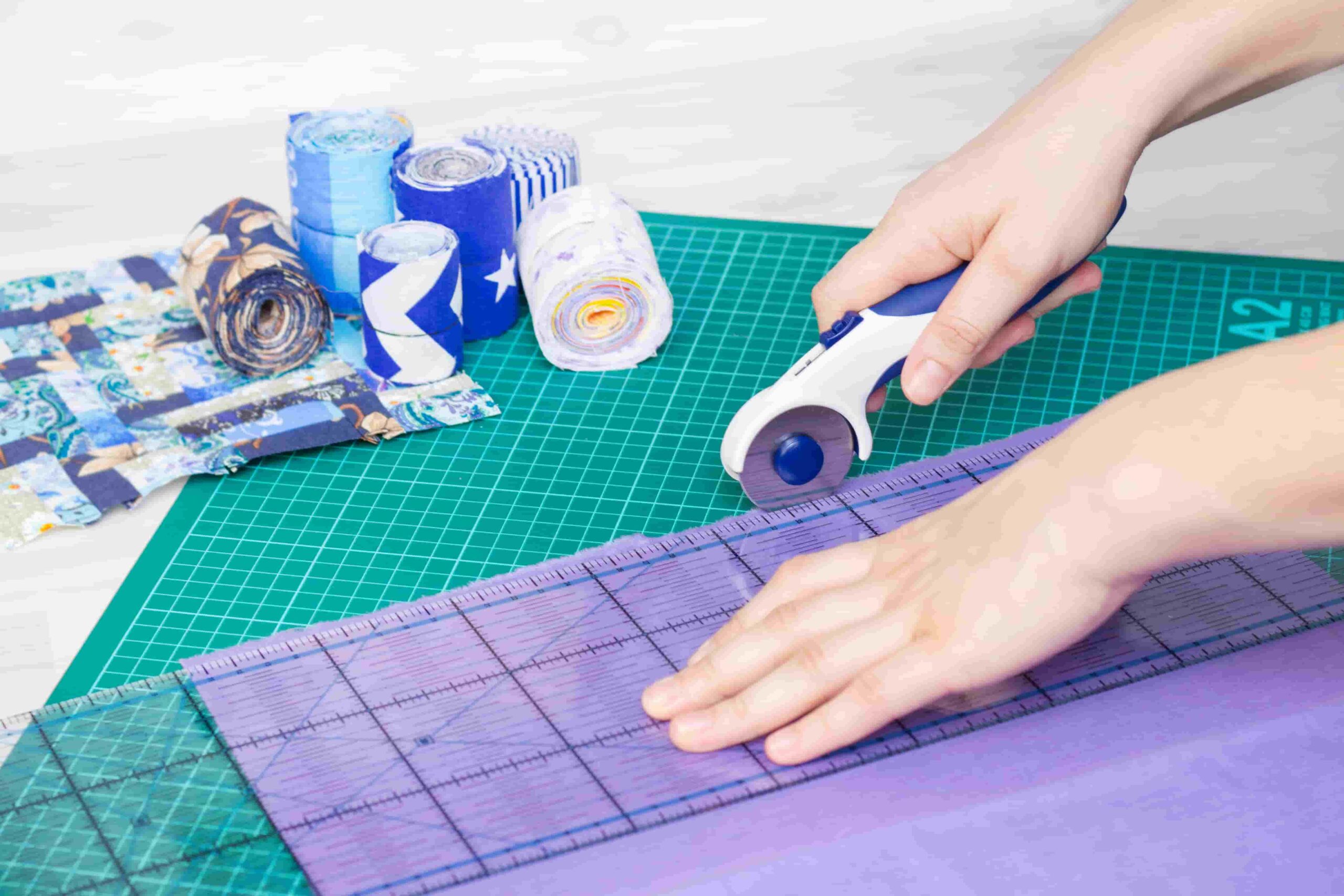
A rotary cutter is an essential cutting tool designed to provide precision and control when cutting fabric. The rotary cutter is distinguished from others by its sharp circular blade, which rotates when pushed along the fabric, allowing for clean, even cuts.
This blade is mounted on an ergonomic handle that allows the operator to maneuver the tool with ease, reducing hand fatigue and improving comfort during extended use.
Rotary cutters are particularly useful for cutting long straight lines, soft curves and even intricate shapes, making them ideal for a wide range of tailoring projects, from clothing and accessories to quilting and patchwork fabric.
One of the main advantages of using a rotary cutter in tailoring is its ability to cut through multiple layers of fabric simultaneously with precision, saving time and ensuring that the cut pieces are perfectly identical. This is especially useful when it comes to large-scale production or projects that require a high degree of uniformity.
In addition, the rotary cutter can be used on a wide variety of fabrics, including cotton, silk, wool, denim and synthetics, demonstrating remarkable versatility. The rotary blade design also reduces the risk of fraying compared with the use of traditional scissors, contributing to a cleaner and more professional edge.
The use of a rotary cutter usually requires a self-repairing cutting mat, which protects the working surface and extends the life of the blade. These mats are marked with grids and measurements that help maintain accuracy and alignment during cutting.
Maintenance of the rotary cutter is relatively simple: the blade must be kept sharp at all times to ensure clean cuts. Several models offer easy replacement of the blade when it deteriorates and dulls.
As pointed out in the article on manual cutters, rotary cutters also have blade guards and locking mechanisms to prevent accidents when the tool is not in use. Crucial precautions to prevent accidental cuts and that making the rotary cutter a safe and reliable choice for tailors of all experience levels.
The best rotary fabric cutters on the market are distinguished by the quality of their blades, ergonomic design, and overall durability. When choosing, it is also important to consider the availability and cost of replacement blades, ease of maintenance, and user reviews to ensure that the tool you choose meets your specific needs.
There are a number of great brands and models on the market, but in order to best navigate your way through the huge range of offerings, we recommend that you contact a reputable and experienced manufacturer or retailer in the field. This way you will be able to receive proper advice and all the necessary assistance in choosing the manual cutter that best suits your needs and business goals.
In this regard, we at Fitex have specialized in the trade and manufacture of spare parts, mechanical parts, accessories and complex solutions for the textile industry for over 40 years.
With a stock of more than 50 thousand items, in our catalog you can choose from a wide range of rotary cutters of the best brands, able to guarantee a clean, accurate and clean cut on all types of material, with always flawless results.
Our strengths, particularly appreciated in the market, are quick delivery, advanced technical advice and total customer support.
Contact us directly to request the ergonomic sewing chair model you are looking for and to receive a personalized quote and dedicated assistance.
Andrea Ferroli
Nadia Leonarduzzi



Every day, a promotion on an item we have in stock: join our mailing list and take advantage of the benefits!
Already know which item you need?
Order it directly from our app, available for Android and iOS.